01
Filtration
Pre-filter mesh, H13 HEPA with about 2.4 m² of media, then a carbon bed. CADR, as designed: 380 m³/h. Concept figure.
Engineering
A short machine. A sealed air path. A motor you should not hear from the pillow. These are concept drawings for a fictional product — precise on purpose, not a lab certificate.
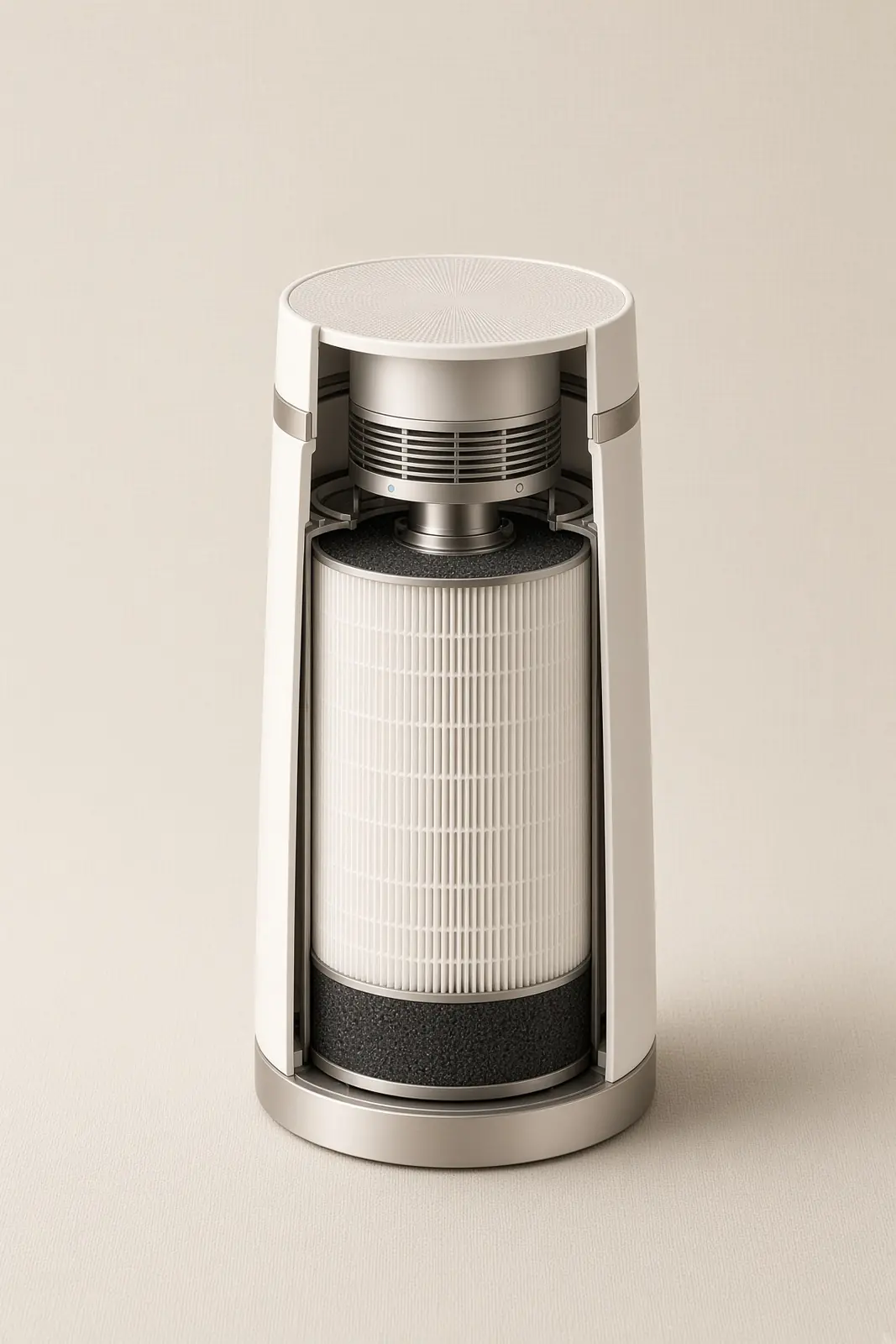
Assembly
Pleated cylinder, 2.4 m² media
The array sits in the intake stream, not in a decorative port on the front. Corrections for heat and humidity happen before a number is trusted.
01
Pre-filter mesh, H13 HEPA with about 2.4 m² of media, then a carbon bed. CADR, as designed: 380 m³/h. Concept figure.
02
The motor is on rubber. The shell is heavy. Sleep is tuned to 24 dB at one meter. Boost reaches 52 dB and is not the point.
03
Sleep sits near 6 W. A typical auto hour is about 18 W. Full power is 45 W — less than a bright lamp, and rarely held.