Why AURA
Most purifiers shout. A light ring, a percentage, a weekly chart. We started from the opposite end: a heavy, quiet object that does the work and then recedes.
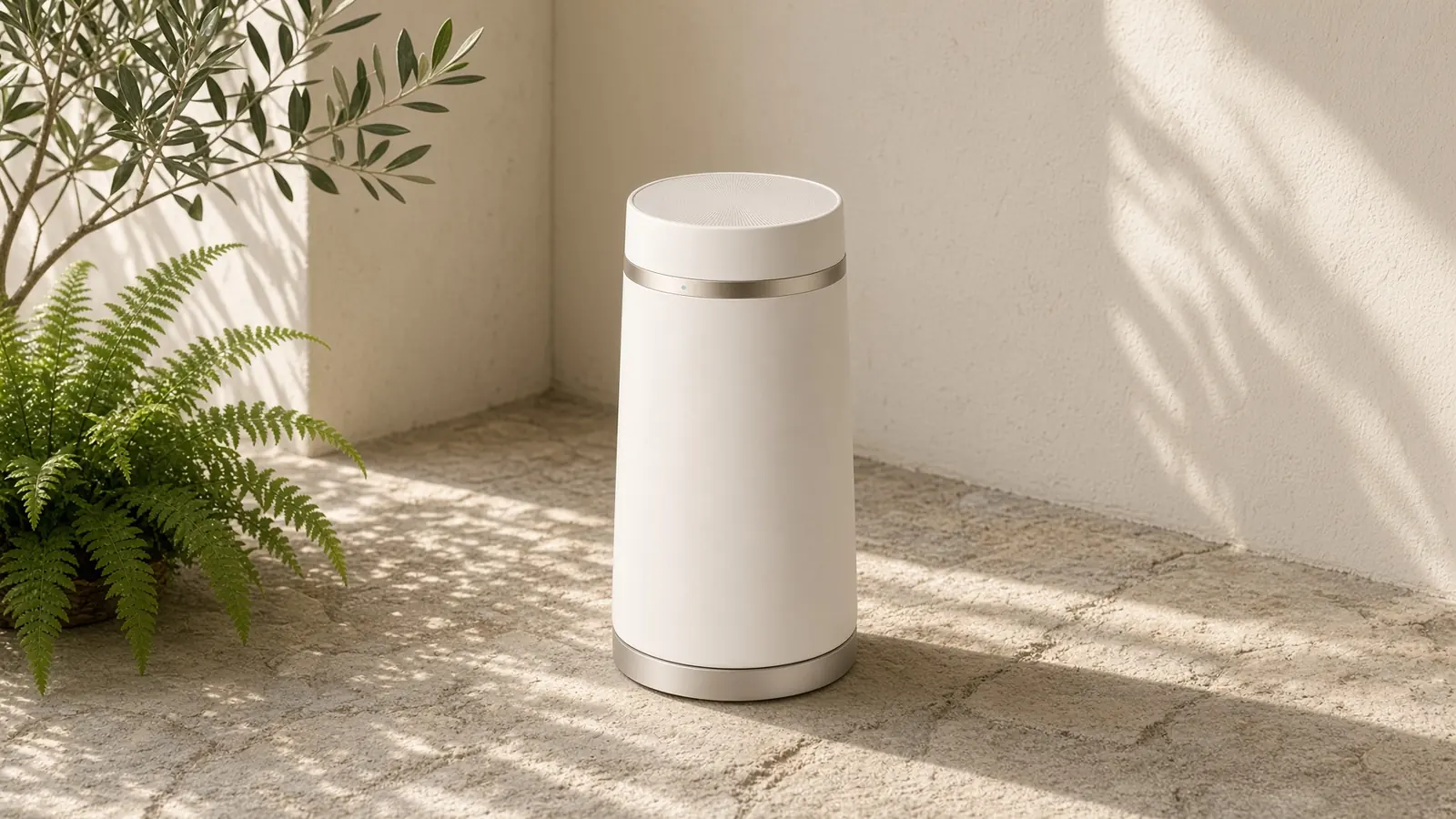
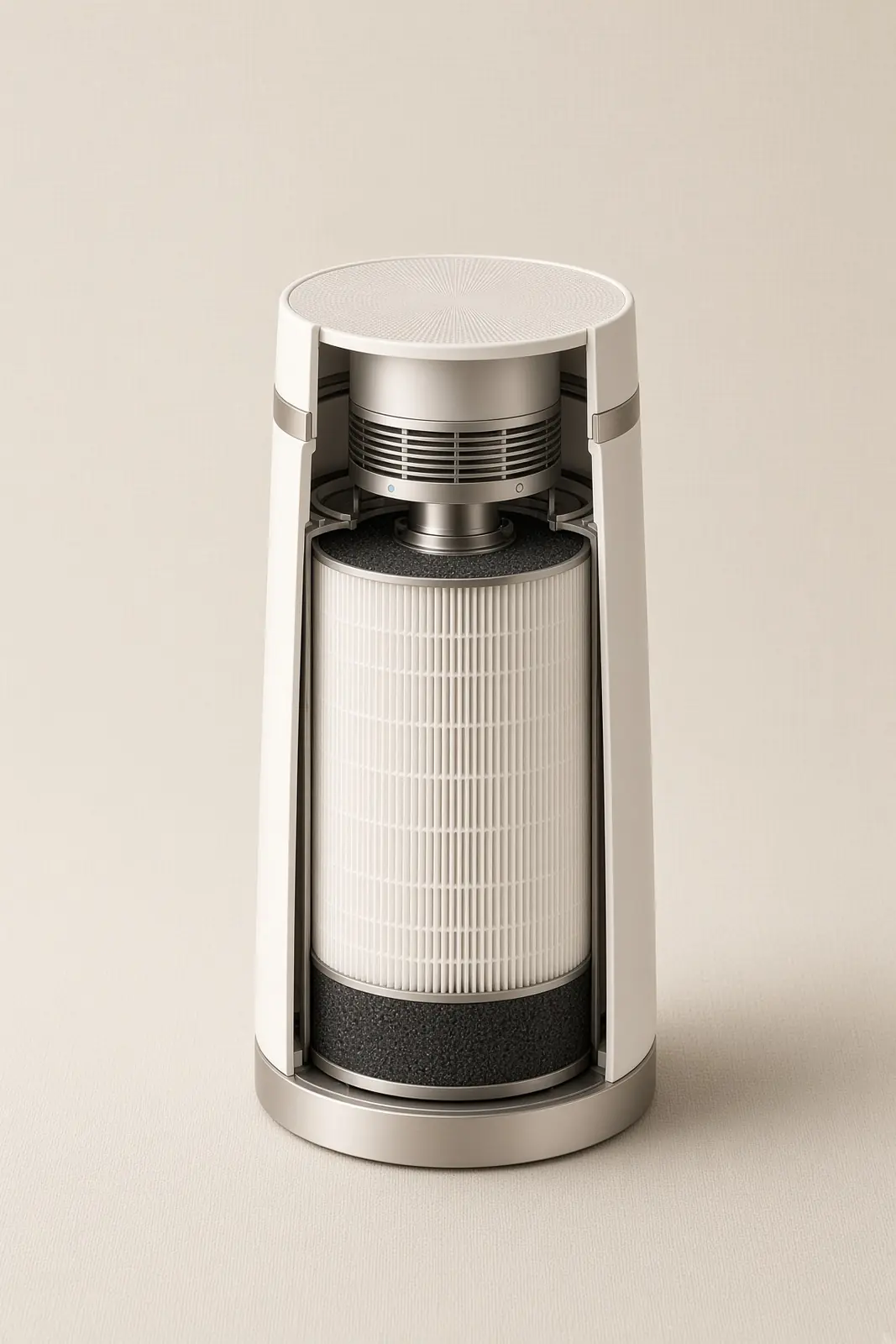
Most purifiers shout. A light ring, a percentage, a weekly chart. We started from the opposite end: a heavy, quiet object that does the work and then recedes.
Measure carefully. Act early. Spend as little fan speed as the room will allow. If a feature needs a screen on the product, it probably belongs in the phone, or nowhere.
The studio, in this fiction, sits in Bengaluru. Acoustics and filtration are argued in the same room. The motor is isolated. The shell is thick because thin plastic rings.
Ceramic, a metal ring, a metal plinth. The silhouette should read as furniture before it reads as an appliance. Finishes are ceramic, graphite, and sand — not a rainbow of plastics.
The tower is meant to stay. The filter is the consumable, and we would rather say that plainly than pretend a machine has no waste. Packaging is paper. The motor is serviceable. Take-back of spent filters is part of the concept, not a badge on the box. AURA itself is a fictional brand — these intentions are part of the story, not a corporate report.